
Eat for weight loss: A practical guide to healthy eating and sustainable weight loss
Many people begin a weight loss journey by searching for the perfect diet, the ideal meal plan, or a list of foods that promise rapid results. In reality, successful weight loss is rarely about a single food, diet, or eating rule. It is usually the result of consistent choices that create a healthier overall pattern of eating.
Learning how to **eat for weight loss** does not mean eliminating entire food groups, avoiding favourite foods forever, or following extreme restrictions. Instead, it means understanding how different foods affect hunger, fullness, calorie intake, and long term eating habits. Small improvements made consistently often produce better results than dramatic changes that are difficult to maintain.
Many people wonder **what to eat to lose weight** and whether there is a specific list of foods that guarantees success. While certain foods can make weight management easier by promoting fullness and providing valuable nutrients, sustainable weight loss depends on the overall pattern of eating rather than any single ingredient or meal.
A practical **weight loss diet guide** focuses on building balanced meals, choosing nutrient dense foods, managing portions, and developing habits that can be maintained over time. The goal is not simply to lose weight quickly but to create an approach that supports both health and long term success.
A **healthy diet for weight loss** typically includes a variety of vegetables, fruits, protein foods, whole grains, legumes, pulses, nuts, and seeds. These foods can help provide important nutrients while supporting appetite control and overall wellbeing. At the same time, understanding which foods and drinks are easier to overconsume can help people make more informed decisions.
When people think about **eating for weight loss**, they often focus only on calories. While calories are important, other factors such as food quality, meal composition, portion sizes, meal planning, physical activity, sleep, and consistency also play an important role in long term progress.
This guide provides a complete introduction to **sustainable weight loss** through healthy eating. It explains the key principles behind weight management, explores the food choices that can support your goals, and links to more detailed resources that can help you build a practical approach that works in real life.
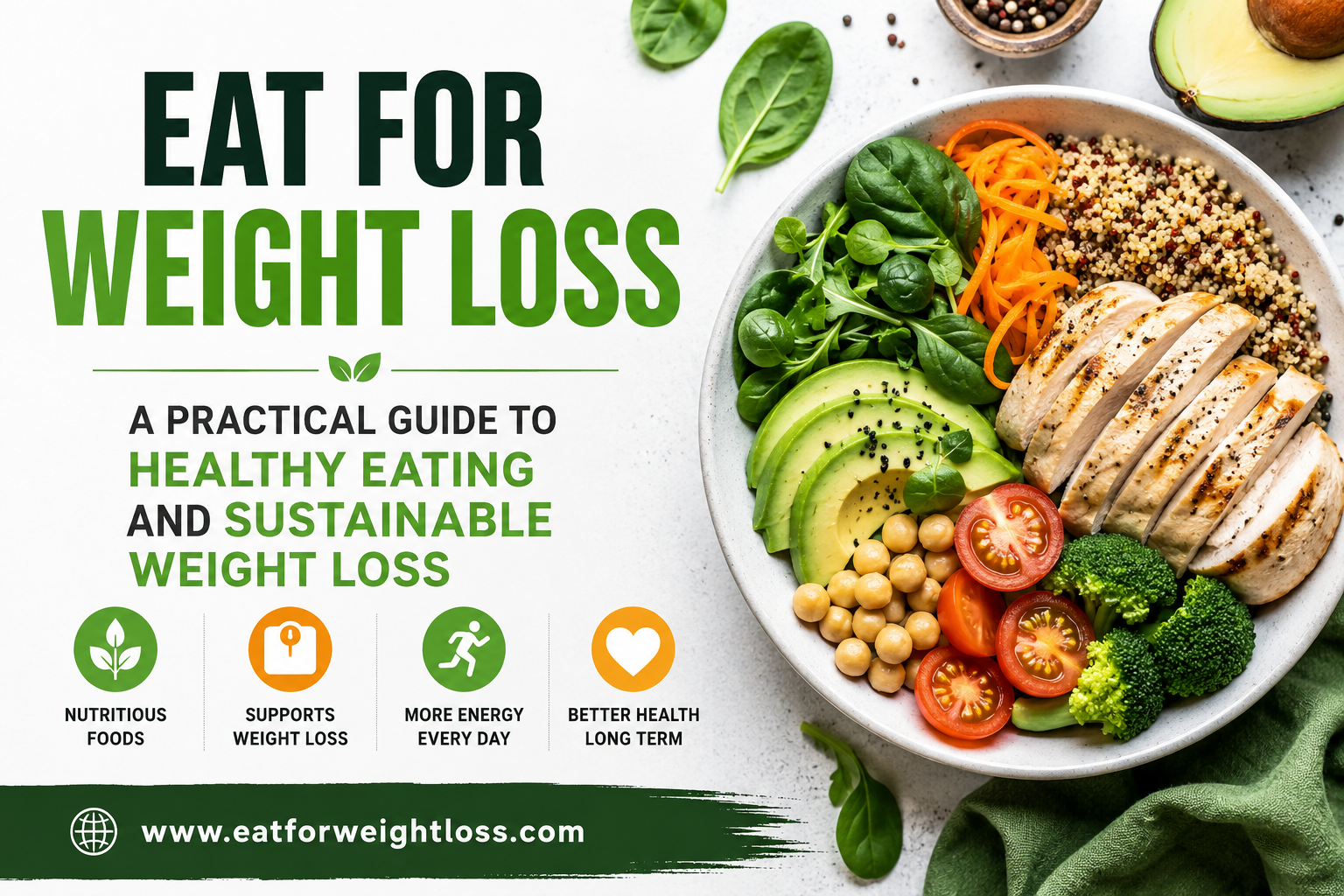
Learn how healthy food choices, balanced meals, calorie awareness, portion control, and sustainable habits can work together to support long term weight loss success.
What does it mean to eat for weight loss?
Many people associate weight loss with strict dieting, skipping meals, eliminating favourite foods, or following highly restrictive eating plans. While these approaches may sometimes produce short term results, they are often difficult to maintain and can make long term success more challenging. Eating for weight loss is not about deprivation. It is about making food choices that support your goals while still providing the nutrients your body needs.
At its core, weight loss occurs when the body uses more energy than it receives from food and drink over time. However, this does not mean that every calorie is equal in terms of how it affects hunger, fullness, food choices, and eating behaviour. Some foods help people feel satisfied for longer, while others may leave them hungry again soon after eating.
A successful **healthy eating for weight loss** approach focuses on building meals around nutritious foods that help manage appetite, support overall health, and fit into everyday life. Rather than chasing quick fixes, the goal is to create eating habits that can be maintained consistently for months and years.
Many people search for the ideal **weight loss diet**, hoping to find a single plan that works for everyone. In reality, different people succeed with different eating patterns. What matters most is finding an approach that provides adequate nutrition, helps maintain a calorie deficit, and can be followed comfortably over the long term.
Eating for weight loss is therefore best viewed as a practical lifestyle approach rather than a temporary diet. By understanding the basic principles of food quality, calorie awareness, portion control, and consistency, it becomes easier to make decisions that support gradual and sustainable progress.
Why food choices matter for weight loss
When people think about weight loss, they often focus only on the number of calories they consume. While calories play an important role, the types of foods chosen each day can have a significant influence on hunger, fullness, cravings, energy levels, and overall eating behaviour. This is one reason why some eating patterns feel easier to maintain than others.
Different foods affect the body in different ways. Foods that contain fibre, protein, and water often help people feel satisfied for longer, making it easier to manage appetite between meals. In contrast, highly processed foods that are low in fibre and protein may be easier to overconsume because they provide less fullness relative to their calorie content.
Choosing the right **foods for weight loss** is therefore about more than simply selecting foods that are low in calories. The goal is to find foods that provide a good balance of nutrition while helping to control hunger and support consistent eating habits. This often makes it easier to maintain a calorie deficit without feeling constantly deprived.
Many people search for the **best foods for weight loss**, hoping to identify specific foods that accelerate fat loss. While no single food can cause weight loss on its own, certain foods can make the process easier by promoting satiety, supporting nutrition, and reducing the likelihood of overeating. Vegetables, fruits, legumes, whole grains, and protein rich foods are common examples.
Food quality also plays an important role. **Nutrient dense foods** provide valuable vitamins, minerals, fibre, and other beneficial nutrients relative to their calorie content. Building meals around these foods can help improve overall diet quality while supporting long term weight management goals.
For this reason, successful weight loss is often less about strict food rules and more about consistently choosing foods that help control hunger, provide good nutrition, and fit naturally into a sustainable pattern of eating.
Understanding calories and energy balance
One of the most important concepts in weight loss is the relationship between calorie intake and calorie expenditure. Calories are units of energy contained in food and drink. The body uses this energy to support essential functions such as breathing, circulation, digestion, physical activity, and countless other processes that occur throughout the day.
The concept of **energy balance** refers to the relationship between the energy consumed through food and drink and the energy used by the body. When energy intake and energy expenditure are roughly equal over time, body weight tends to remain relatively stable. When energy intake consistently exceeds energy expenditure, weight gain may occur. When energy expenditure exceeds energy intake, weight loss becomes possible.
This state, known as a **calorie deficit**, is the fundamental mechanism behind weight loss. Regardless of the specific eating pattern followed, the body generally needs to use more energy than it receives over an extended period in order to reduce stored body fat. However, creating a calorie deficit does not require extreme dieting or severe food restriction. For many people, gradual changes to food choices, portion sizes, and daily habits can be enough to create a sustainable deficit.
While the principle itself is straightforward, the practical application can vary from person to person. Factors such as age, body size, activity level, health status, and lifestyle all influence how many calories an individual may need. This is why there is no single number that works for everyone.
Many people therefore ask how many **calories for weight loss** they should consume each day. The answer depends on individual circumstances and goals. Rather than focusing on a specific number alone, it is often more helpful to understand the broader principles of energy balance and build eating habits that support gradual, sustainable progress over time.
Understanding these concepts provides a useful foundation for making informed food choices and helps explain why successful weight loss is typically the result of consistent habits rather than short term dieting strategies.
The best foods to eat for weight loss
When people begin a weight loss journey, one of the first questions they ask is which foods they should eat more often. While no single food can cause weight loss on its own, some foods make it easier to manage hunger, control calorie intake, and maintain a balanced eating pattern. These foods often provide a combination of fibre, protein, water, vitamins, minerals, and other beneficial nutrients.
The most effective **foods for weight loss** are usually those that provide a high level of satisfaction relative to their calorie content. They help people feel fuller for longer, support overall health, and fit naturally into sustainable eating habits. Rather than focusing on restrictive food rules, it is often more helpful to build meals around nutrient rich food groups that support long term success.
Many of the **healthy foods for weight loss** recommended by nutrition experts are foods that people can enjoy regularly as part of everyday meals. These foods can help create balanced meals while making it easier to maintain a calorie deficit without constant hunger or deprivation.
The following food groups represent some of the most useful **weight loss foods** to include as part of a healthy eating pattern. Each group offers unique nutritional benefits and can contribute to appetite control, meal satisfaction, and long term weight management.
Vegetables
Among all food groups, **vegetables for weight loss** are often considered some of the most valuable choices. Most vegetables are naturally low in calories while providing significant volume, allowing people to eat satisfying portions without consuming excessive energy.
Many vegetables are also rich in fibre and water, two factors that can contribute to feelings of fullness. Non starchy vegetables such as leafy greens, broccoli, cauliflower, cabbage, courgettes, peppers, cucumbers, and similar options can add bulk to meals while helping control overall calorie intake.
Including a generous serving of vegetables with meals can increase meal volume, improve nutrition, and make weight loss eating patterns feel more satisfying and sustainable.
Fruits
Some people avoid fruit when trying to lose weight because of concerns about natural sugars. However, whole **fruits for weight loss** can be a valuable part of a healthy eating plan. Fruits provide fibre, vitamins, minerals, and water while often satisfying cravings for sweet foods.
Whole fruits generally have a different effect on fullness than highly processed sugary foods. The fibre structure of fruit can help slow digestion and promote satiety, making fruit a useful snack or meal component for many people.
Portion awareness remains important, but for most people, including a variety of whole fruits can support both nutrition and weight management goals.
Protein foods
**Protein foods for weight loss** are often recommended because protein can help increase feelings of fullness and support the maintenance of muscle mass during weight loss. Meals that contain adequate protein may help reduce hunger between meals and make it easier to maintain a calorie deficit.
There are many protein rich options available, including legumes, pulses, lentils, beans, dairy products, and other plant based protein sources. Different foods can be combined to create satisfying meals that provide both protein and other important nutrients.
Including a source of protein in most meals can be a practical strategy for improving meal satisfaction and supporting long term weight management.
Whole grains
Contrary to some popular dieting trends, carbohydrates do not automatically prevent weight loss. In many cases, **whole grains for weight loss** can play a useful role in a balanced eating plan. Whole grains provide fibre and other nutrients that are often removed during processing.
Examples include oats, brown rice, whole wheat products, barley, and similar foods. These foods can contribute to meal satisfaction and may help support more stable eating patterns when consumed in appropriate portions.
The focus should generally be on choosing higher quality carbohydrate sources and balancing them with vegetables, protein foods, and healthy fats.
Legumes and pulses
**Legumes and pulses for weight loss** deserve special attention because they provide both protein and fibre, a combination that can be particularly helpful for appetite control. Lentils, beans, chickpeas, and similar foods can contribute to filling meals while supporting overall nutrition.
These foods are often versatile, affordable, and suitable for a wide variety of meal styles. Because they combine several beneficial nutritional qualities, legumes and pulses can form an important part of a sustainable weight loss eating pattern.
For many people, increasing the use of legumes and pulses is a simple way to improve meal quality while supporting satiety.
Nuts and seeds
Although **nuts and seeds for weight loss** are relatively calorie dense, they can still be included as part of a healthy eating plan. Nuts and seeds provide healthy fats, fibre, protein, and a variety of nutrients that contribute to overall diet quality.
Because they are calorie dense, portion awareness is important. However, moderate amounts can add flavour, texture, and satisfaction to meals and snacks, potentially helping people feel more content with their eating patterns.
Rather than avoiding nuts and seeds completely, many people benefit from including sensible portions within a balanced diet focused on long term sustainability.
While no single food guarantees weight loss, building meals around vegetables, fruits, protein foods, whole grains, legumes, pulses, nuts, and seeds can make healthy eating more satisfying, nutritious, and sustainable. These food groups provide a combination of fibre, protein, vitamins, minerals, and other nutrients that support appetite control and overall wellbeing.
The most successful approach is usually not to focus on individual foods in isolation, but to create an overall eating pattern that emphasises variety, balance, and consistency. By regularly choosing nutrient rich foods and building meals around them, many people find it easier to manage hunger, maintain a calorie deficit, and support long term weight loss goals.
Foods and drinks that can make weight loss harder
Successful weight loss is not only about choosing foods that support progress. It is also helpful to understand which foods and drinks may make it more difficult to maintain a calorie deficit. This does not mean that any food must be permanently eliminated, but some choices are easier to overconsume and may contribute large numbers of calories without providing lasting fullness.
Many **foods to avoid when losing weight** share common characteristics. They may be highly processed, easy to eat quickly, low in fibre or protein, or particularly high in calories relative to their volume. Regularly consuming large portions of such foods can make weight management more challenging.
Certain **high calorie foods** can still fit into a healthy eating pattern, but understanding calorie density is important. Foods that contain large amounts of fat, added sugars, or refined ingredients often provide significant calories in relatively small portions. Being aware of this can help people make more informed decisions and manage portions effectively.
Beverages also deserve attention. Many people focus entirely on food while overlooking the calories they drink. Choosing suitable **drinks for weight loss** can help reduce unnecessary calorie intake while supporting hydration and overall health.
The goal is not to label foods as good or bad. Instead, it is to recognise which choices support long term goals more effectively and which choices may require greater awareness and moderation.
Highly processed foods
Highly processed foods are often designed to be convenient, appealing, and easy to consume in large quantities. While there is nothing inherently wrong with enjoying these foods occasionally, they can sometimes make weight management more difficult because they often combine large amounts of refined carbohydrates, fats, added sugars, and flavour enhancers in a relatively small volume.
Many processed foods provide a significant number of calories without creating the same level of fullness that less processed foods may offer. As a result, it can be easier to consume more calories than intended before feeling satisfied.
Examples may include certain fast foods, packaged snack foods, highly processed ready meals, and similar convenience products. Being aware of how these foods fit into an overall eating pattern can help support more balanced food choices.
Sugary foods and desserts
Sugary foods and desserts are often enjoyed for celebrations, treats, and special occasions. However, many of these foods contain large amounts of added sugars and calories while providing relatively little fibre or protein.
Because these foods are often highly palatable, it can be easy to consume larger portions than originally intended. Cakes, pastries, biscuits, sweets, confectionery, and similar desserts may contribute substantial calories without providing lasting fullness.
This does not mean such foods must be avoided completely. Instead, moderation and portion awareness can help people enjoy them while still supporting their overall weight loss goals.
Calorie dense snack foods
Some foods provide a large number of calories in a relatively small serving size. These calorie dense foods can fit into a healthy eating pattern, but they often require greater portion awareness than foods that contain more water and fibre.
Snack foods such as crisps, chips, savoury snacks, and similar convenience products can sometimes be consumed quickly and mindlessly, particularly while watching television, working, or engaging in other activities. This can make it difficult to recognise how much has actually been eaten.
Developing awareness of serving sizes and choosing more filling alternatives when appropriate can help reduce unintentional calorie intake while maintaining enjoyment and flexibility.
Liquid calories and sugary drinks
Many people pay close attention to the foods they eat while overlooking the calories contained in beverages. Yet drinks can sometimes contribute a substantial amount of energy without creating the same feelings of fullness that solid foods provide.
Soft drinks, sweetened coffees, energy drinks, milkshakes, sweetened beverages, and some fruit drinks may contain significant amounts of sugar and calories. Because liquids are often consumed quickly, they may have less impact on appetite than foods containing similar amounts of energy.
For many people, replacing high calorie beverages with lower calorie alternatives can be one of the simplest ways to reduce overall calorie intake. Water, unsweetened tea, black coffee, and other low calorie options can support hydration while helping maintain a calorie deficit.
Understanding which foods and drinks are easier to overconsume can help people make more informed decisions without creating unnecessary food rules. Successful weight loss does not require perfection, nor does it require completely eliminating favourite foods. Instead, it involves recognising how different choices affect hunger, fullness, calorie intake, and long term eating habits.
By building most meals around nutritious, satisfying foods while remaining mindful of highly processed foods, calorie dense snacks, sugary treats, and high calorie beverages, it becomes easier to create an eating pattern that supports both health and sustainable weight loss.
Building balanced meals for weight loss
Text
Portion control and mindful eating
Text
Meal planning for weight loss success
Text
Healthy habits that support weight loss
Text
Common weight loss mistakes to avoid
Text
Frequently asked questions about eating for weight loss
Text
Key takeaways
Text